Sharik · Poligraph Poligraphovich Sharikov
The Heart of a DogSharik / Poligraph Poligraphovich Sharikov is a mongrel dog whose experimental transformation into a humanlike creature turns a rescued animal into a medical subject, a named resident, and a political actor. His passage from Sharik to Sharikov is more than a change of form: each name marks a different claim to identity, and the final return to dog form unsettles the official accusation that he has been murdered.
Identity and Origin
A case record identifies the experimental subject as a male mongrel, approximately two years old, named Sharik. When first encountered, he is a hungry, injured stray; a gentleman offers him a piece of sausage and calls him Sharik. The dog accepts the food with immediate gratitude, and the name becomes attached to the animal before any medical intervention or human status is contemplated.
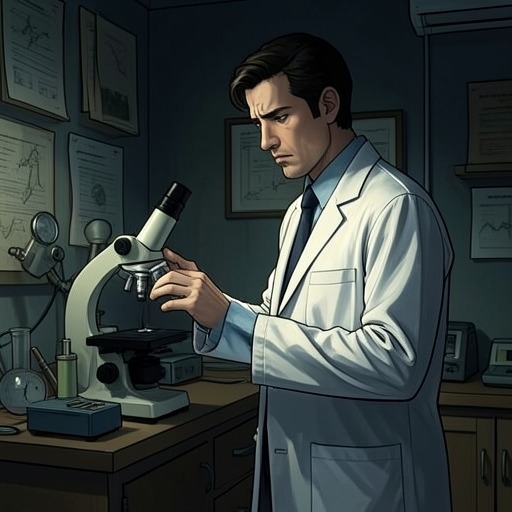
After a week in Professor Preobrazhensky’s care, the record describes him as exceptionally well nourished and weighing eight kilograms. That recovery precedes the operation, which takes place on December 23. Under anaesthesia, the surgeon removes the dog’s testes and implants human testes from a recently deceased man; the surgeon then opens the skull and replaces the dog’s pituitary gland with the same donor’s human gland. The procedure makes Sharik’s body the site where animal life and human tissue are deliberately combined.
Transformation and Naming
The operation produces a change that initially confounds its maker’s expectations. On January 8, the final diagnosis in the case notes states that pituitary transplantation has induced “total humanisation,” not rejuvenation. The notes describe the creature walking around the apartment for the first time, laughing at the electric light, and standing upright with the appearance of a short, awkwardly built man. His emerging speech includes words such as “Bourgeois,” alongside habitual, apparently uncomprehending swearing. These observations record a transition in outward form and speech, not a settled account of an inner human identity.
The new being takes part in choosing a name. Asked what he proposes to call himself, he gives the name Toligraph Poligraphovich. Later, when asked what surname he will take, he insists on his “real name”: Sharikov. The contrast is telling. Toligraph Poligraphovich is his proposed personal name, while Sharikov ties the human claimant back to the dog’s earlier name. His identity is therefore neither wholly detached from his canine origin nor simply assigned by the people who transformed him.
Social and Official Identity
Sharikov’s new name becomes a matter of administration as well as self-description. Shvonder, chairman of the house committee, offers to prepare a certificate identifying the bearer as Poligraph Poligraphovich Sharikov and even proposes that he was born in the apartment. The proposed document would make the flat his place of origin and turn an experimental creation into someone whom official records could recognize. Professor Preobrazhensky objects to the idea that Sharikov was born in the ordinary sense, but the request itself shows how quickly a bodily transformation becomes a dispute over paperwork and residence.
Sharikov later signs a denunciation as a sub-department controller of the City Cleansing Department, countersigned by Shvonder. It accuses Professor Preobrazhensky of threatening Shvonder, making counter-revolutionary speeches, ordering Zinaida Prokofievna Bunina to burn Engels, and keeping Doctor Bormenthal secretly in his apartment without registration. Whatever the document’s reliability, it demonstrates that Sharikov has acquired an institutional role and can use official language against the people who made and house him. His status is no longer only a medical question: he claims rights and acts through the administrative system.
Conflict, Death Claim, and Return
The conflict in the apartment reaches a decisive crisis when Sharikov asserts a right to thirty-seven square feet and refuses to leave. He then draws a revolver on Bormenthal. Bormenthal overpowers him, and the scene ends with Sharikov lying motionless while the surgeon holds him down. The narration presents this as the consequence of Sharikov’s own action, but the later appearance of the same name in a formal murder charge makes the event’s status a matter of public dispute.
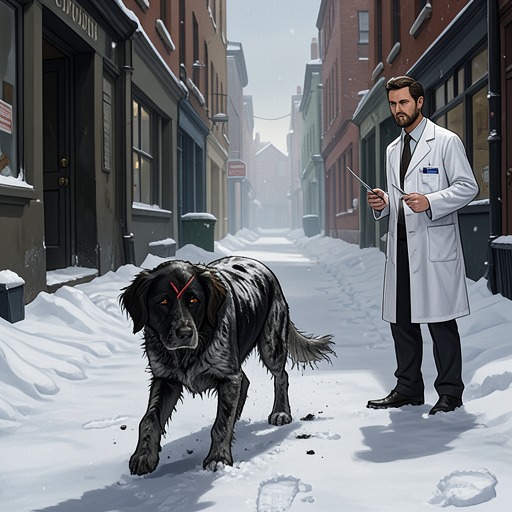
Ten days later, a charge is read accusing Preobrazhensky, Bormenthal, Zinaida Bunina, and Darya Ivanova of murdering Poligraph Poligraphovich Sharikov, identified as a sub-department controller of the City of Moscow Cleansing Department. Preobrazhensky responds by treating the charge as a question of identity: he asks who Sharikov is and refers to him as the dog on whom he operated. At his instruction, Bormenthal brings Sharik into the room. The animal is partly bald, with patches of regrown coat and a crimson scar on his forehead; he enters briefly on his hind legs, drops to all fours, then sits in an armchair after rising and grinning. His appearance overturns the accusation’s assumption that Sharikov is simply a missing human victim.
Narrative Significance
The movement between Sharik and Sharikov shows identity being made and contested through several different authorities. The gentleman names the hungry dog; the experiment alters his body; Sharikov chooses a surname grounded in his former name; the house committee proposes a certificate; and his administrative position gives the name public force. At the end, the murder charge preserves that human identity on paper even as the returned dog in the room makes it impossible to treat the two forms as separate, uncomplicated lives.
The case notes, official papers, and final accusation also frame Sharikov through competing records. The medical account interprets transformation as an experimental result, the committee’s proposed certificate turns it into a question of birth and residence, and the denunciation and charge make it a political and legal matter. The closing demonstration does not erase the violence of the preceding conflict, but it changes what can be claimed about its outcome: Sharikov is alleged to have been murdered, while Sharik is physically present.